Makhana Recipes
Makhana Recipes: From Mithila’s Traditional Kitchen to Today’s Modern Plate

Makhana—better known globally as fox nut or gorgon nut—is having a remarkable second life. Once closely associated with ponds, fasting days, festive offerings and the kitchens of Bihar and eastern India, it now appears in everything from protein-conscious snacks and breakfast bowls to gluten-free pasta and contemporary desserts.
But the modern popularity of makhana is not simply a social-media trend. Euryale ferox, the aquatic plant from which makhana comes, has a long culinary and cultural history, while recent food-science research is exploring its starch, protein, phenolic compounds, processing behaviour and potential as a functional food.
The interesting story, therefore, is not traditional versus modern. It is how an old food is being rediscovered—and how traditional recipes can be adapted to contemporary lifestyles without losing their identity.
What Exactly Is Makhana?
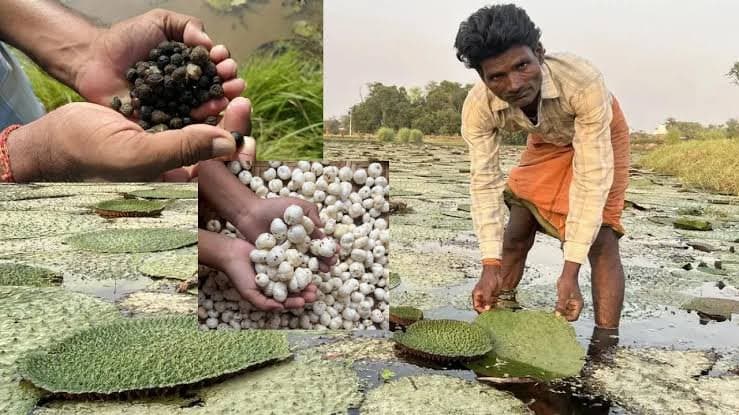
Makhana is the edible, popped seed of Euryale ferox Salisb., an aquatic plant belonging to the Nymphaeaceae family. The plant grows in ponds and other still-water environments, particularly in eastern and northeastern India.
Bihar has historically been the heartland of Indian makhana cultivation. Scientific reviews describe North Bihar, especially the Mithila region, as a major centre of production and traditional processing.
The seed that eventually becomes the familiar white, airy puff undergoes a remarkably demanding traditional process. Seeds are dried, graded, heated, tempered and heated again before being manually popped. Traditional popping can involve temperatures of roughly 250–320°C, followed by manual cracking of the shell.
That labour is an important part of makhana's story. What looks like a simple snack in a packet represents a long agricultural and processing tradition.
Makhana in the Traditional Kitchen
Long before the word "superfood" became fashionable, makhana was already a versatile ingredient.
Ethnobotanical documentation from Mithila records makhana in religious offerings, marriage rituals, fasting foods and everyday cooking. Traditional preparations include snacks, sweetened makhana, kheer, porridge, makhana kofta, dal-based preparations and dum aloo.
Recent reviews similarly document traditional preparations such as kheer, curry, laddu, panjiri and khoa-based sweets, showing that makhana's culinary identity extends far beyond the now-famous roasted snack.
The traditional kitchen treated makhana as an ingredient. The modern food industry is increasingly treating it as a platform.
1. Traditional Roasted Makhana
Perhaps the simplest recipe is also one of the best.
Ingredients
- 2 cups makhana
- 1–2 teaspoons ghee
- Rock salt or regular salt
- Freshly ground black pepper
- Optional: roasted cumin powder
Method
- Heat a heavy-bottomed pan on low to medium heat.
- Add the makhana without oil and dry-roast slowly.
- Keep stirring so that the pieces roast evenly.
- Test one between your fingers. Properly roasted makhana should feel crisp rather than chewy.
- Add ghee and toss briefly.
- Finish with salt, black pepper and roasted cumin.
The key is low, patient heat. High heat can brown the outside before the interior becomes properly crisp.
Scientific research supports the importance of roasting for texture and acceptability. A human-food study found that roasting improved the crispness, texture and sensory acceptance of fox nuts, while roasted samples also showed higher measured phenolic, flavonoid, mineral and antioxidant values than the unroasted samples.
Today's Version
- Smoked paprika + black pepper
- Chilli-lime
- Garlic + nutritional yeast
- Rosemary + black pepper
- Turmeric + cumin
- Peri-peri spice
- Sesame + chilli
The principle remains the same: roast first, season after.
2. Traditional Sweet Makhana — Makhana Paagal
One of the more distinctive traditional preparations is Makhana Paagal, a sweetened or caramelised makhana preparation documented in Mithila culinary practice.
Ingredients
- 2 cups roasted makhana
- 3–4 tablespoons sugar
- ½ teaspoon cardamom powder
- 1 teaspoon ghee
Method
- Roast the makhana until crisp.
- Add ghee.
- Sprinkle in the sugar and allow it to melt.
- Toss quickly so that the melted sugar coats the makhana.
- Turn off the heat.
- Add cardamom.
- Spread on a plate and allow it to cool.
As it cools, the coating becomes crisp.
Modern Interpretation
Instead of refined sugar, contemporary cooks can experiment with:
- Jaggery
- Date syrup
- Coconut sugar
- Dark chocolate
- Cinnamon and orange zest
These substitutions change the nutritional profile and flavour, but they should not automatically be described as "healthier." A sweet made with jaggery is still a sweet.
3. Makhana Kheer: The Classic Dessert
If one recipe represents the meeting point of tradition, celebration and comfort food, it is makhana kheer.
Ingredients
- 2 cups makhana
- 1 litre milk
- 2–4 tablespoons sugar, according to taste
- ½ teaspoon cardamom powder
- 1 tablespoon chopped almonds
- 1 tablespoon chopped cashews
- 1 teaspoon ghee
- Optional: saffron
Method
- Roast the makhana in ghee.
- Crush roughly; don't turn everything into a fine powder.
- Bring milk to a gentle boil.
- Add the crushed makhana.
- Simmer until the makhana softens and the milk thickens.
- Add sugar and cardamom.
- Add nuts and saffron.
- Serve warm or chilled.
Why Crushing Matters
Crushing creates a mixture of creamy and slightly chewy textures. A completely smooth powder produces a different dessert.
For today's kitchen, you can also make a high-protein-style kheer by reducing the sugar and adding Greek yogurt only after the cooked mixture has cooled somewhat. Alternatively, use unsweetened plant milk for a dairy-free version.
4. Makhana Curry
Makhana is surprisingly good in savoury gravies because its porous structure absorbs flavour.
Ingredients
- 2 cups roasted makhana
- 1 onion, finely chopped
- 2 tomatoes, pureed
- 1 teaspoon ginger-garlic paste
- ½ teaspoon turmeric
- 1 teaspoon coriander powder
- ½ teaspoon cumin
- ½ teaspoon garam masala
- 1–2 tablespoons yogurt or cream
- 1–2 teaspoons oil or ghee
- Salt
- Fresh coriander
Method
- Roast the makhana separately.
- Prepare a basic onion-tomato masala.
- Add the spices.
- Cook until the oil begins to separate.
- Add water to create the desired gravy.
- Add roasted makhana near the end.
- Simmer briefly.
- Finish with yogurt or cream and coriander.
Don't overcook the makhana. The goal is for it to absorb the gravy while retaining some texture.
Traditional documentation already records makhana in curries, kofta and dum aloo preparations.
5. Makhana Raita
This is where the ingredient becomes particularly useful for modern everyday eating.
Ingredients
- 1 cup roasted makhana
- 1½ cups thick yogurt
- ½ teaspoon roasted cumin powder
- Salt
- Chopped coriander
- Optional: finely chopped cucumber
- Optional: chilli
Method
Roast and lightly crush the makhana. Mix with seasoned yogurt just before serving. For a more interesting texture, keep some pieces whole.
It works as:
- A side dish with rice
- An accompaniment to roti
- A fasting meal
- A cooling summer dish
- A convenient snack
6. Makhana Chaat: The Modern Indian Street-Food Version
Ingredients
- 2 cups roasted makhana
- ½ cup boiled potato or sweet potato
- Chopped onion
- Tomato
- Coriander
- Green chilli
- Roasted cumin
- Chaat masala
- Lemon juice
- Optional yogurt
- Optional tamarind chutney
Method
Mix everything immediately before serving.
For a contemporary version, replace some potato with:
- Chickpeas
- Sprouts
- Roasted vegetables
- Pomegranate
- Cucumber
The result is crunchy, acidic, spicy and fresh rather than the rich profile associated with traditional makhana sweets.
7. Makhana Breakfast Bowl
This is where makhana fits naturally into today's busy lifestyle.
Ingredients
- 1 cup roasted makhana
- ½ cup yogurt
- Banana or berries
- Apple
- Chia or flaxseed
- Nuts
- Cinnamon
Method
Layer yogurt, fruit and makhana in a bowl. Add seeds and nuts immediately before eating.
For a savoury breakfast, replace yogurt and fruit with:
- Boiled eggs
- Cucumber
- Tomatoes
- Avocado
- Sprouts
- Herbs
The important nutritional principle is combination. Makhana should not be expected to provide everything a meal needs.
8. Makhana Flour Pancakes
Ingredients
- ½ cup makhana flour
- ¼ cup besan
- ¼ cup whole-wheat flour or another flour
- Cumin
- Salt
- Chilli
- Water
- Chopped coriander
Method
Mix into a pourable batter and cook on a lightly greased pan.
This approach is consistent with recent research exploring makhana flour and its functional characteristics for food applications. Processing studies have investigated its starch behaviour, water absorption and other properties relevant to product development.
9. Makhana Pasta: From Pond to Modern Pantry
This sounds unusual, but it is part of the direction in which makhana food technology is moving.
In January 2025, ICAR-CIPHET reported technologies including fat-free flavoured makhana, gluten-free cereal pasta, makhana kheer mix and makhana puffs.
That is significant because the modern story isn't limited to putting chilli powder on roasted makhana.
Researchers and food technologists are investigating how makhana can become:
- Flour
- Pasta
- Bakery ingredients
- Ready-to-eat snacks
- Instant mixes
- Functional food ingredients
- Protein- and fibre-oriented formulations
A 2025 study, for example, investigated the use of spent makhana flour in vegetable cookies and found potential for improving nutritional and functional characteristics of the resulting product.
10. Makhana Chocolate Bites
For today's children—and adults who prefer dessert in small portions—this is an easy fusion recipe.
Ingredients
- Roasted makhana
- Dark chocolate
- Peanut or almond butter
- Sea salt
- Optional pistachios
Method
- Melt dark chocolate gently.
- Stir in a small amount of nut butter.
- Fold in roasted makhana.
- Spoon into small clusters.
- Sprinkle with sea salt.
- Refrigerate until firm.
This is not a traditional makhana preparation. It represents something different: using the crisp structure of makhana as a modern snack ingredient.
11. Makhana Trail Mix for Modern Working Life
For office drawers, travel and school lunch boxes, a simple trail mix can be more practical than elaborate recipes.
Combine:
- Roasted makhana
- Almonds
- Pumpkin seeds
- Peanuts
- Raisins
- Coconut flakes
- Roasted chickpeas
Season with black pepper, cumin and a little salt.
The advantage is convenience. The disadvantage is that nuts, seeds and dried fruit can make the calorie density considerably higher than plain makhana.
So portion size still matters.
What Does Science Actually Say About Makhana?
This is where the modern conversation needs some caution.
Makhana contains substantial carbohydrate and starch, along with protein, minerals and various phytochemicals. Reviews describe compounds including polyphenols, polysaccharides, tocopherols and other bioactive constituents.
But "nutritious" does not mean "medicine."
Some laboratory and animal research has reported antioxidant, glucose-related, lipid-related and other biological effects. These findings are scientifically interesting, but they should not be converted into claims that eating makhana treats diabetes, heart disease or another medical condition.
One particularly interesting human study examined the glycemic response of fox nuts. It reported a low glycemic index in its experimental setting and found that roasting improved several measured nutritional and antioxidant parameters. However, that does not mean every commercial makhana snack will have the same glycemic response—especially if it is coated with sugar, chocolate or other carbohydrate-rich ingredients.
Roasting, Soaking, Grinding: Does Preparation Matter?
Absolutely.
Food processing changes the physical and chemical properties of seeds and starches.
Research on Euryale ferox has investigated how thermal treatment changes its physicochemical, structural and antioxidant characteristics.
Another study found that seed-coat phenolics can interact with starch and influence starch digestion in laboratory experiments.
More recently, researchers have investigated resistant starch from different Euryale ferox varieties, finding substantial differences between varieties and evidence of potential prebiotic-related functionality in laboratory models.
A 2025 study on germinated makhana flour reported changes in protein, mineral-related composition, water/oil absorption and antinutritional factors after germination.
The broader lesson is simple:
Makhana is not nutritionally identical in every form. Variety, processing, roasting, grinding, cooking and the ingredients added to it all matter.
From Fasting Food to Everyday Food
One of makhana's most interesting cultural transformations is its movement beyond religious fasting.
Historically, its non-cereal nature made it particularly suitable for fasting traditions. Ethnographic research from Mithila documents its use in religious ceremonies, offerings and festival foods.
Today, however, people are eating it for entirely different reasons:
- Convenience
- Crunch
- Plant-based eating
- Interest in traditional foods
- Lower-fat snack alternatives
- Gluten-free food options
- Experimentation with regional ingredients
- Fitness and wellness trends
This doesn't make the traditional uses obsolete. Instead, it gives makhana a second culinary vocabulary.
The Future of Makhana Recipes
The next generation of makhana food may look very different from the traditional bowl of roasted fox nuts.
1. Makhana Flour
Useful in pancakes, flatbreads, baked foods and composite flours.
2. Functional Snacks
Seasoned, roasted and portion-controlled products.
3. Gluten-Free Products
Makhana's starch-rich flour is being explored for applications beyond conventional wheat foods.
4. Instant Kheer and Dessert Mixes
A modern convenience version of an old recipe.
5. Bakery Products
Recent research has already explored makhana-containing cookies and other value-added products.
6. Sustainable Food Processing
Researchers are increasingly interested in using processing by-products rather than treating them simply as waste. The 2025 spent-makhana cookie study is one example of this direction.
A Modern Makhana Menu
If you wanted to build a complete day's menu around this ingredient, it could look like this:
Time Recipe Breakfast Makhana-yogurt fruit bowl Mid-morning Chilli-lime roasted makhana Lunch Makhana curry + roti + salad Afternoon Makhana chaat Evening Makhana trail mix Dinner Vegetable soup with toasted makhana Dessert Light makhana kheerThe important point is not to eat makhana at every meal. Variety remains the foundation of a healthy diet.
Traditional Soul, Modern Plate
Makhana's journey is unusually rich. It begins in the ponds of eastern India, passes through the skilled hands of cultivators and processors, enters Mithila's rituals and kitchens, and now finds itself in contemporary snack packets, food laboratories and international markets.
Its future should not require abandoning its past.
A good modern makhana recipe can still begin with the same simple act that generations of Indian cooks understood instinctively: roast the makhana patiently, respect its texture, and let the ingredient speak for itself.
The real innovation is not turning every traditional food into a "superfood."
It is taking a culturally important ingredient, understanding its science honestly, and finding new ways for it to remain useful in people's everyday lives.